Halfway between the beaches of the south and the summits of Gran Canaria, the GC-60 road dips into a ravine lined with palm trees and whitewashed houses. This is Fataga, the village everyone calls the Valley of a Thousand Palms, a must-stop for anyone driving up to Tejeda without rushing, and one of the inland corners that fewest tourists see despite sitting a stone's throw from Maspalomas.
Fataga belongs to the municipality of San Bartolomé de Tirajana and sits on a wide ravine running down from the summits to the coast, in the south of the island. The popular name comes from the Canary palm trees that cover its slopes in terraces, one of the largest concentrations of this endemic species in the whole archipelago. The village itself, with narrow streets and white houses topped by pitched roofs, keeps a rural feel that has already vanished from most of the south coast, just half an hour's drive away.
A stroll through Fataga takes little more than half an hour: the church of San Bartolomé on the central square, cobbled streets climbing between fig and almond orchards, and makeshift viewpoints between the houses, with the ravine opening up below. Several bars and restaurants serve simple Canarian cooking (potaje stew, goat meat, local cheeses) on terraces overlooking the valley, a regular stop for tours heading up to Tejeda.
A few minutes down the ravine, towards Arteara, lies one of the largest aboriginal burial sites in the Canary Islands: a field of stone mounds among the palm trees where the island's early inhabitants buried their dead, used for centuries before the Castilian conquest. The site has a small interpretation centre and is explored on foot, usually with hardly another visitor in sight.
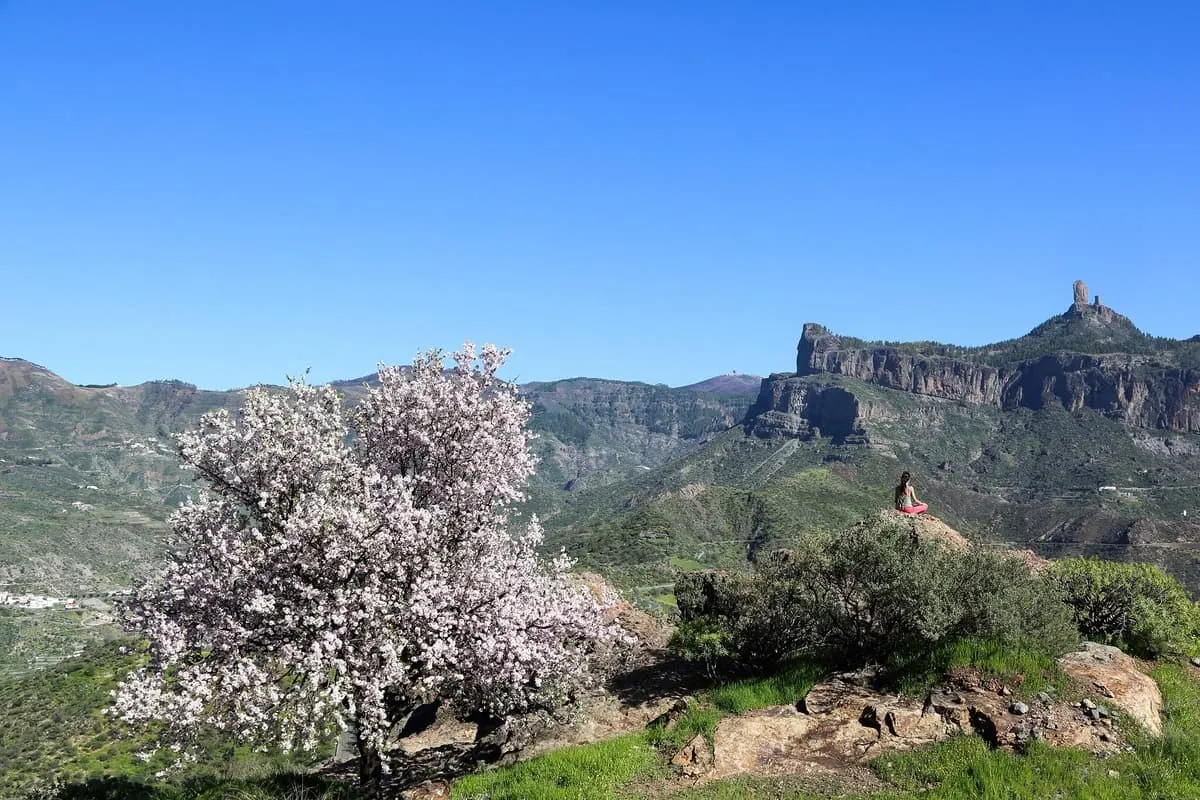
Climbing from Fataga towards Ayacata, the road gains height and offers one of the most photographed views in southern Gran Canaria: the Degollada viewpoint, where the Fataga ravine falls away in terraces of palm trees until it fades into the coastal haze. Worth a stop, even for just five minutes.
The GC-60 is narrow and winding in places, so not everyone fancies taking the wheel. The full-day tour of Gran Canaria's highlights reaches Fataga after visiting Arucas, Teror and Roque Nublo: pick-up from the south and Las Palmas, 8 hours and €44 per adult, lunch included.
Why is Fataga called the Valley of a Thousand Palms? Because of the density of Canary palm trees covering the ravine, one of the largest concentrations of this endemic species on the island.
What is the Arteara Necropolis? An aboriginal burial site with hundreds of stone mounds, a few minutes down the ravine from Fataga.
Can you visit Fataga without a car? Yes: the full-day tour of Arucas, Teror, Roque Nublo and Fataga picks up in southern Gran Canaria and Las Palmas.
More plans on the island? Roque Nublo, the symbol of Gran Canaria, the town of Teror, and all our tours in Gran Canaria.

A 5-day plan with the best-rated excursions, real prices and local tips. As a PDF, ready for your phone.
Download the guide (PDF)Free, no sign-up: straight download.