There's a tree in northern Tenerife that has shown up on old peseta coins and banknotes, and in the imagination of anyone who's seen a photo of the Canary Islands without yet knowing its name. It's the Drago Milenario of Icod de los Vinos, a Dracaena draco with a thick trunk and an umbrella-shaped crown that has stood here since long before the town around it existed.
A dragon tree isn't like other trees: it has no growth rings, so nobody can date it with precision. The most accepted estimates put it at 800 to 1,000 years old, which makes it the oldest and largest dragon tree still standing anywhere in the world. It's about 17 metres tall, and its multiple trunk, formed from several stems fusing from the base, measures over 20 metres around.
To the Guanches, the island's original inhabitants, the dragon tree was sacred: the reddish sap it bleeds when cut, known as dragon's blood, was used for ritual and medicinal purposes. Today it's still the unofficial symbol of Tenerife, and the reason Icod de los Vinos, a town that might otherwise go unnoticed on a route around the island, draws visitors year round.
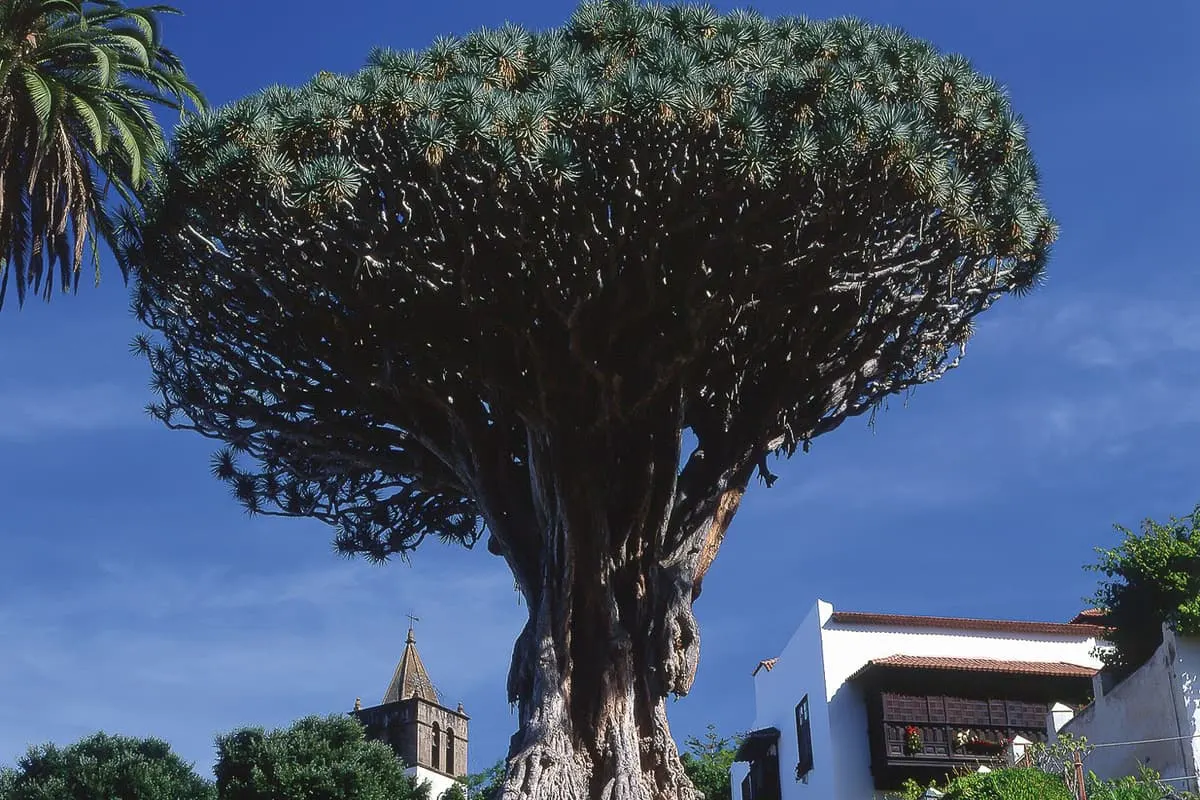
The tree stands in the Parque del Drago, right in the old quarter of Icod de los Vinos, next to the church of San Marcos. From the Plaza de la Pila just beside it, you get the classic postcard view, the whole tree for free, with the bell tower peeking out behind the crown. To walk around it inside the garden that protects it, you need a paid ticket at the park's own entrance, open morning and afternoon every day of the week.
Icod's old quarter, with its wooden balconies and cobbled streets, is worth a half-hour stroll before or after seeing the tree: it's not the best-known town in northern Tenerife, but it's one of the few that has kept its original layout intact.
If you're staying in the south and don't want to drive, the tour to Mount Teide, Icod, Garachico and Masca picks you up at your hotel and climbs first through Vilaflor toward Teide National Park, with the volcanic formations of Las Cañadas. From there it drops down to Icod de los Vinos to see the Drago Milenario, with free time to walk around and have lunch on your own, before continuing to Garachico and finishing in the village of Masca. It runs 8 hours and costs €59 per adult, in an air-conditioned vehicle with a live guide and hotel pickup included.
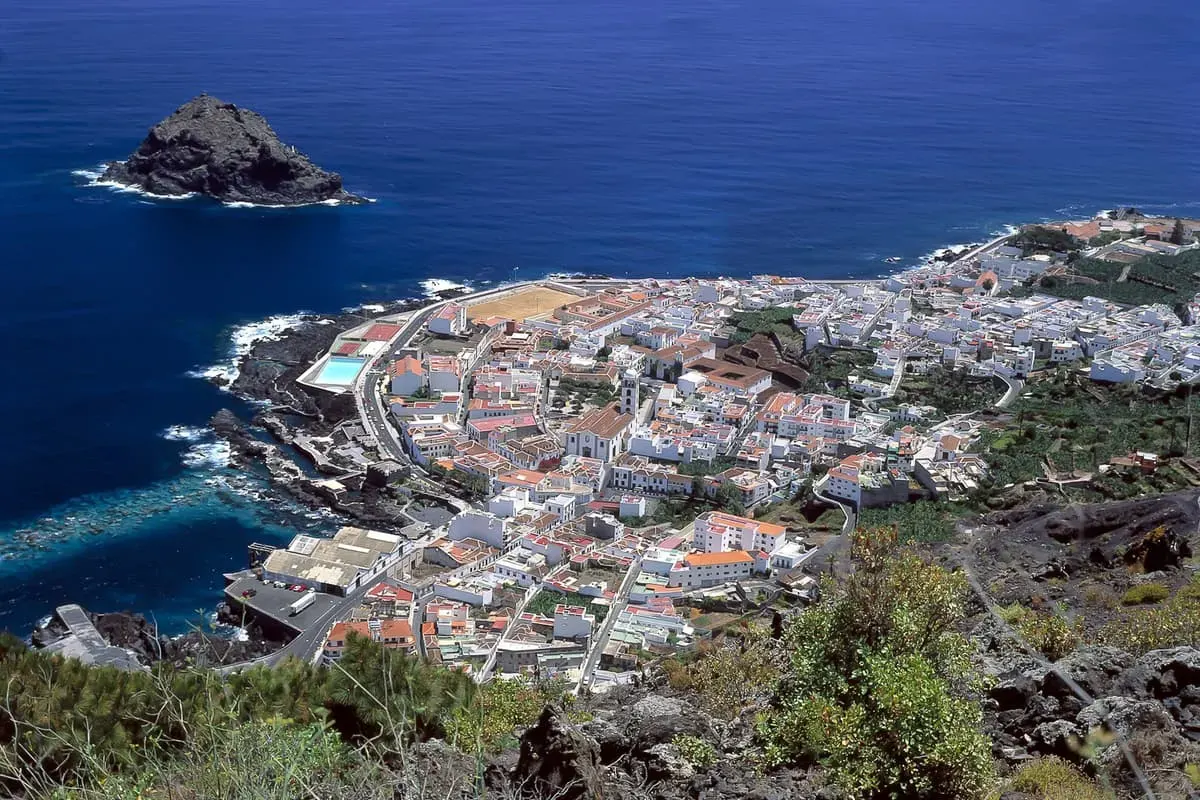
Fifteen minutes' drive from Icod is Garachico, a fishing town that was partly buried in 1706 by lava from the Trevejo volcano, which also wiped out its harbour. The town was rebuilt on top of its own lava flow, and that same cooled lava by the sea formed El Caletón, a set of volcanic natural pools where you can still swim today.
How old is the Drago Milenario in Icod de los Vinos? It can't be dated precisely because dragon trees don't form growth rings. The most accepted estimates put it at 800 to 1,000 years old.
Can you see the Drago Milenario for free? Yes, from the Plaza de la Pila you can see the whole tree at no cost. Entering the garden around it, inside the Parque del Drago, requires a paid ticket.
How do you reach the Drago Milenario from southern Tenerife without a car? The easiest way is the tour to Teide, Icod, Garachico and Masca, which picks up at hotels in the south and stops in Icod de los Vinos on the way to Garachico and Masca.
Still planning your route through the north? Discover the village of Masca, the Teide cable car prices and all our tours in Tenerife.

A 5-day plan with the best-rated excursions, real prices and local tips. As a PDF, ready for your phone.
Download the guide (PDF)Free, no sign-up: straight download.