On the north coast of La Gomera, under a wall of volcanic rock that drops almost straight into the sea, a whitewashed village seems to hang off the cliff edge. That's Agulo, and from its main street you can look across the Atlantic and see the full outline of the Teide rising above the clouds. Few spots in the Canaries hand you that postcard view so easily.
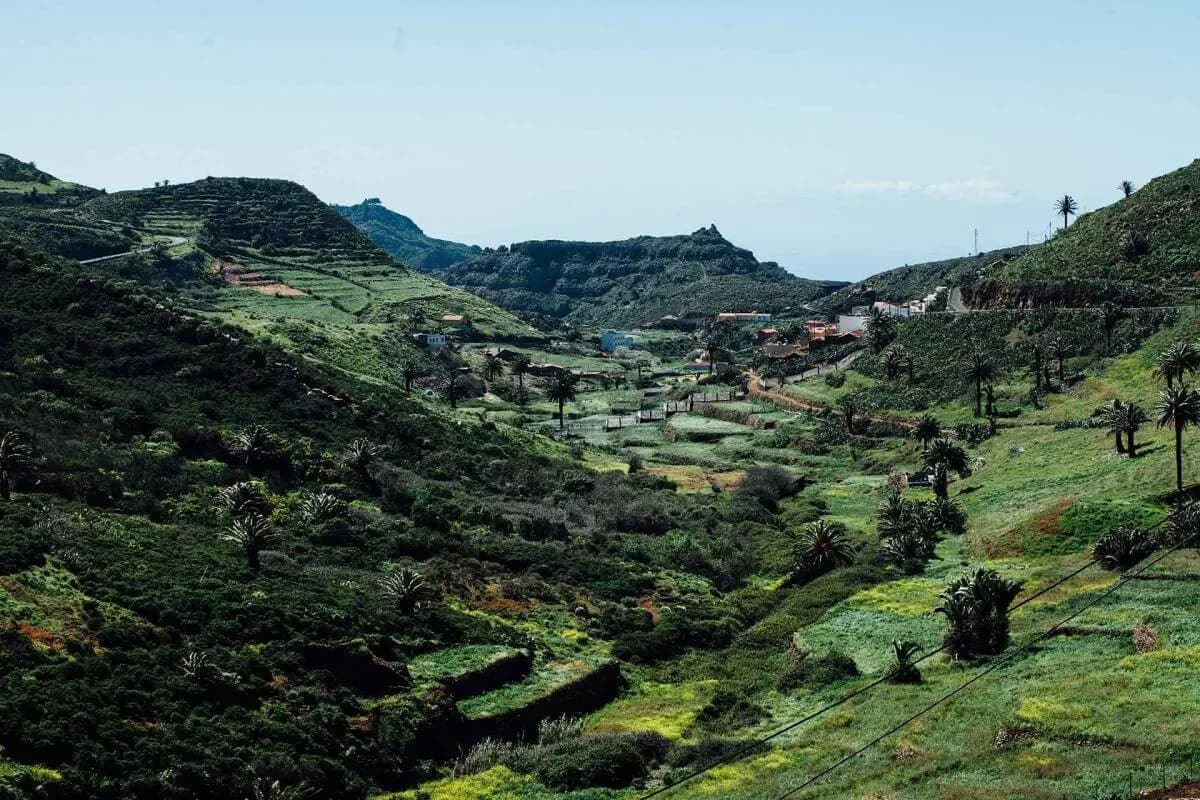
Agulo has barely a thousand residents and lives between banana plantations and farming terraces, tucked into a small coastal shelf at the foot of a volcanic rock face that shields it from the north wind. That position, suspended between sea and mountain, earned it the nickname "La Gomera's balcony": its low, whitewashed houses with pitched roofs look out almost directly over the ocean. The village keeps one of the best-preserved clusters of traditional Canarian architecture on the island, with cobbled streets and wooden balconies that have barely changed in a century.
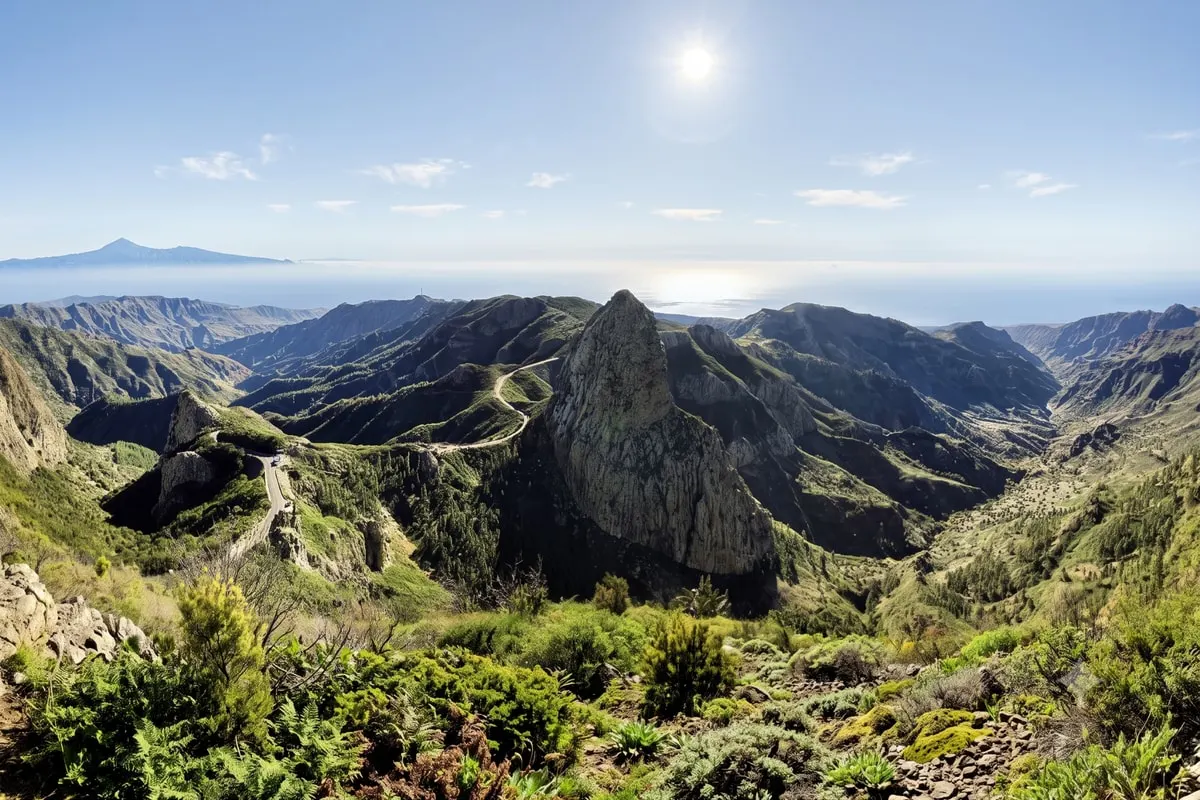
Right above the village, the Mirador de Abrante delivers the area's best photo: a glass walkway suspended over the ravine, designed by Canarian architect José Luis Bermejo and opened in 2013. From there you take in the whole Agulo valley and, on clear days, the Teide stands out sharply across the water. It has its own restaurant for a meal with that view, and it generally opens from morning to mid-afternoon, though it's worth checking the hours before you go up, since they shift with the season. If you'd rather skip the glass floor, the village itself offers similarly striking natural lookouts from several of its streets.
Agulo's centre, known as La Villa de Arriba, is the best place on the island for an unhurried walk through traditional architecture: whitewashed houses with tiled roofs, inner courtyards, and balconies carved from Canarian pine. The square is presided over by the Iglesia de San Marcos, a neo-Gothic church built in 1912 on the site of the 17th-century chapel that gave the village its start. Every year, during the patron saint festivities on April 24 and 25, the famous San Marcos bonfires light up the village's steep streets. Down by the sea, the small Playa de San Marcos has dark volcanic sand and pebbles; the north coast swell tends to be rough, so it's a better spot for a walk than a swim.
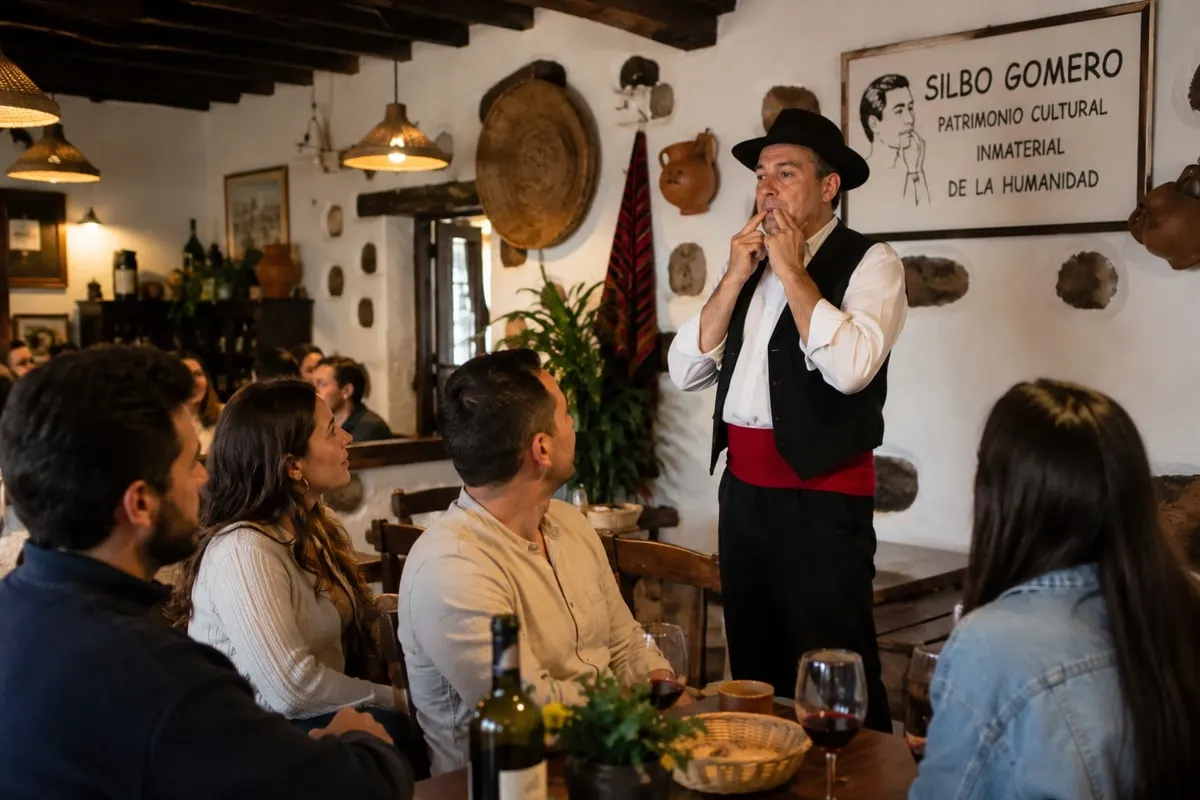
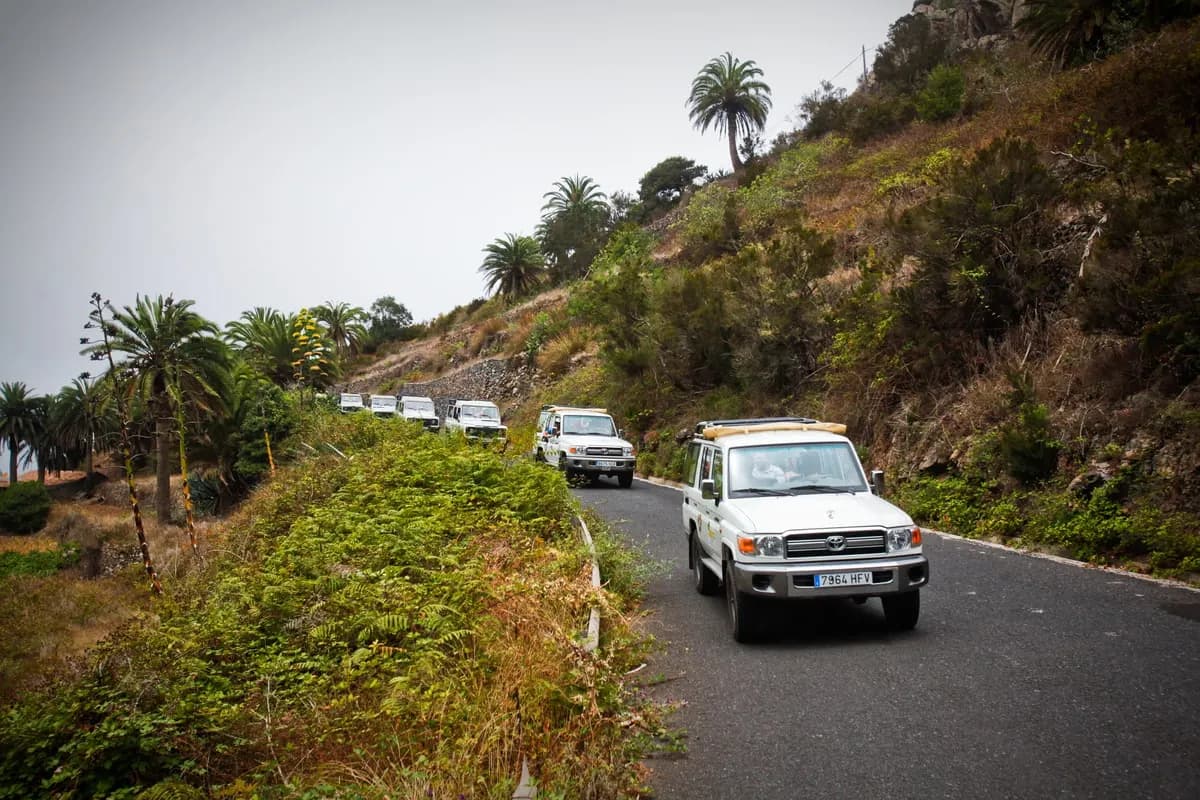
The easiest way to see Agulo without renting a car is the guided La Gomera tour with ferry and lunch from Tenerife: it crosses on the Fred Olsen ferry from Los Cristianos, tours the Hermigua valley and La Laguna Grande inside Garajonay National Park, stops for a traditional Canarian lunch in Agulo with a live demonstration of silbo gomero (the whistled language, a UNESCO Intangible Cultural Heritage), and wraps up at Roque de Agando with free time in San Sebastián. It runs 10 hours, picks up at 39 points across southern and northern Tenerife, and costs €110 per adult, with an official multilingual guide and national park entry included.
If you're already staying on La Gomera, Agulo is just as easy to visit on your own: it's about 25 km from San Sebastián along the GM-1 mountain road, winding but well paved, a little over half an hour by car.
Why is Agulo called "La Gomera's balcony"? Because the village sits on a shelf suspended between the sea and a volcanic rock face, with open views over the Atlantic and, on clear days, the Teide in Tenerife.
Can you see the Teide from Agulo? Yes, on clear days it's visible from the village itself, and especially from the Mirador de Abrante, its glass walkway over the ravine.
How do you visit Agulo without a rental car? With the guided La Gomera tour with ferry and lunch from Tenerife, which stops in Agulo for lunch and a silbo gomero demonstration, or with the local bus from San Sebastián.
Still planning your route around La Gomera? Check out Garajonay National Park, the Roque de Agando, or all our things to do in La Gomera.

A 5-day plan with the best-rated excursions, real prices and local tips. As a PDF, ready for your phone.
Download the guide (PDF)Free, no sign-up: straight download.